

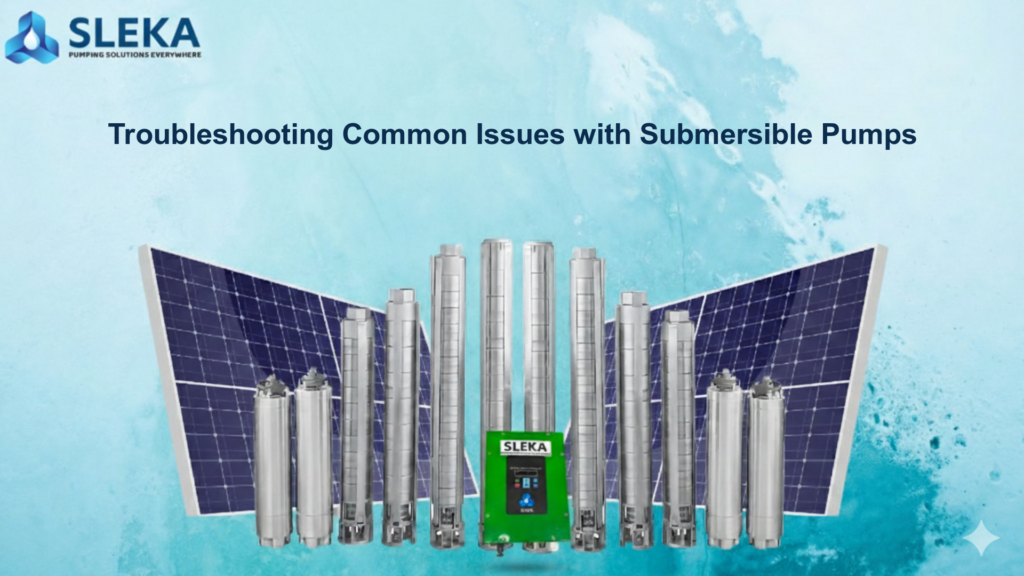
Troubleshooting Common Issues with Submersible Pumps
Submersible pumps are essential components used in various applications, from agriculture to industrial systems. As reliable, efficient tools, these pumps ensure that water is lifted from deep underground sources. However, like any mechanical instrument, submersible pumps can encounter issues that may affect their performance. Understanding how to troubleshoot these common issues can save time and resources.
Understanding Submersible Pumps
Submersible pumps are designed to operate underwater, making them highly efficient for irrigation and drainage tasks. They work by converting rotational energy into kinetic energy, which allows them to pump water from depths that surface pumps cannot reach. SLEKA specializes in solar submersible pumps that harness renewable energy, ensuring that farmers and industries can access high-efficiency pumps that are both sustainable and powerful.
Common Issues and Solutions
1. Pump Won’t Start
One of the most common issues encountered with submersible pumps is that they fail to start. This can be attributed to various factors, including:
- Power Supply Issues: Ensure that the power supply to the pump is functioning correctly. Check for blown fuses or tripped breakers.
- Float Switch Problems: For pumps with automatic controls, the float switch may be stuck or faulty. Inspect and clean the switch to ensure it’s working properly.
If these solutions don’t resolve the issue, it may be necessary to consult a professional technician.
2. Insufficient Water Flow
If your submersible pump is running but not delivering enough water, it could be due to:
- Clogged Impeller: Debris or sediment can clog the impeller. Turn off the power, and carefully clean the pump to remove any obstructions.
- Incorrectly Sized Pump: Ensure that the pump is appropriately sized for the application. A pump that is too small for the job may struggle to deliver adequate flow rates.
Consider upgrading to a solar pump designed for your specific needs for better efficiency and performance.
3. Overheating
Overheating can lead to premature pump failure. Common causes include:
- Continuous Operation: If the pump runs continuously without breaks, it can overheat. Implement a timer or control system to allow for rest periods.
- Inadequate Cooling: Ensure that water is surrounding the pump during operation to provide necessary cooling.
Using high-efficiency pumps can help mitigate overheating issues by enhancing energy management.
Conclusion
Regular maintenance and prompt troubleshooting are critical for ensuring that your submersible pump operates efficiently. Familiarizing yourself with common problems and their solutions can lead to better performance and longevity of your pumps. With the rise of future solar pumps technology, there’s a wider range of effective solutions available for agricultural and industrial applications alike.
FAQ
1. What is a submersible pump?
A submersible pump is a device designed to be submerged in water for extracting it from deep underground sources.
2. How do I maintain my submersible pump?
Regular checks for blockages, ensuring proper electrical connections, and scheduling professional inspections can greatly enhance the pump’s longevity.
3. Can submersible pumps be used for both residential and industrial applications?
Yes, submersible pumps are versatile and can be utilized in both residential settings, such as wells, and in industrial applications, like water treatment plants.
For more insights and assistance with your submersible pump systems, feel free to explore SLEKA’s offerings or reach out for professional guidance!