

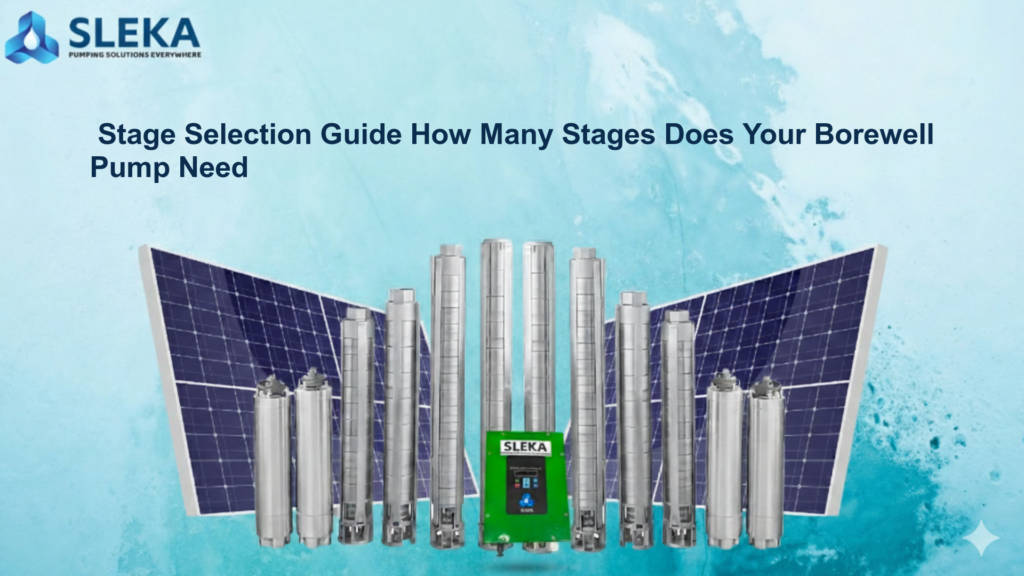
Selecting the right borewell pump can be challenging, especially when it comes to deciding how many stages your submersible pump should have. Understanding the concept of stages in a submersible pump and its impact on your pumping efficiency is crucial for optimal water delivery, particularly in the agricultural and industrial sectors. This guide aims to clarify what a stage in a submersible pump is, while helping you make an informed decision on your borewell pump needs.
What Is Stage in Submersible Pump?
In the context of submersible pumps, a “stage” refers to the individual pumping unit or compartment that increases the water pressure. A multi-stage pump consists of two or more impellers, each contributing to the overall pressure increase. More stages typically mean higher head pressure, which allows the pump to lift water from greater depths.
For instance, a single-stage pump will be suitable for shallow borewells, whereas multi-stage pumps are essential for deeper wells that require significant pressure to draw water. Understanding this fundamental principle is vital when selecting the right pump for your requirements.
Factors Influencing the Number of Stages
When contemplating how many stages your submersible pump needs, consider the following factors:
-
Depth of Borewell: Depth is a major determinant. For depths up to 50 feet, a single-stage pump may suffice. However, for wells deeper than 50 feet, it’s advisable to opt for a multi-stage submersible pump.
-
Water Requirement: Assess your water requirement. If your agricultural land necessitates a significant amount of water, you might need a pump with more stages to maintain a consistent water supply.
-
Pump Efficiency: Multi-stage pumps tend to be more efficient due to their ability to generate higher pressure. This efficiency is particularly crucial when pumping water over long distances.
-
Type of Submersible Pump: The kind of submersible pump you choose plays a role in stage selection. For instance, deeper water levels often necessitate more advanced designs and configurations.
Choosing the Right Submersible Pump Manufacturer
It’s essential to select a reliable manufacturer when sourcing your submersible pump. SLEKA Industries is recognized among the top submersible pump manufacturers in India, known for producing high-quality submersible pumps, motors, and controllers designed to meet varying agricultural and industrial water needs. Proper support from a reputable manufacturer can further enhance operational efficiency and longevity of your equipment.
When looking for the best submersible pump company in India, focus on manufacturers that prioritize quality, efficiency, and customer service. Investing in a high-quality pump can lead to significant long-term savings in both maintenance and electricity costs.
Conclusion
In conclusion, the selection of the number of stages for your borewell pump is a pivotal decision that hinges on factors like the depth of the borewell and your specific water needs. A comprehensive understanding of what a stage in a submersible pump is will assist you in making the right choice for your application. Always consider working with reputable suppliers like SLEKA Industries to ensure you gain access to quality products that enhance both productivity and reliability.
FAQ
1. How do I know how many stages my submersible pump needs?
Assess the depth of your borewell and your water supply requirements. For deeper wells, multi-stage pumps are typically necessary.
2. Is a multi-stage pump always better than a single-stage pump?
Not necessarily. The choice depends on your specific needs, including the depth of the borewell and the required water pressure.
3. What is the average lifespan of a submersible pump?
With proper maintenance, submersible pumps can last anywhere from 8 to 15 years, depending on usage and environmental conditions.
For more information on selecting the right pump, visit SLEKA Industries. Your water efficiency is our priority.