

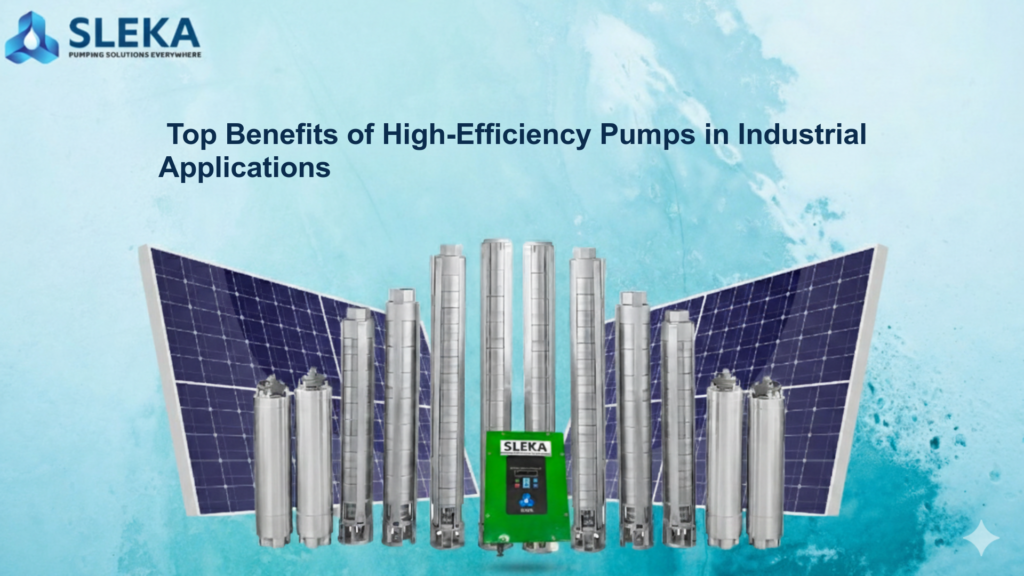
High-efficiency pumps play a crucial role in enhancing productivity in various industrial applications, particularly in agriculture and urban infrastructure. The shift towards high-efficiency pumps not only improves operational efficiency but also contributes to significant energy savings. In this blog, we will explore the top benefits of using high-efficiency pumps, particularly solar submersible pumps, and how they are shaping the future of sustainable industrial practices.
Improved Energy Efficiency
One of the most significant benefits of high-efficiency pumps is their ability to operate using less energy compared to standard pumps. These pumps are designed with advanced engineering that minimizes energy consumption while maximizing performance. For industries that rely heavily on water distribution, such as agriculture, utilizing high-efficiency solar pumps can lead to substantial reductions in operating costs. By investing in solar submersible pumps, businesses can reduce their dependence on traditional energy sources, thus aligning themselves with sustainable practices.
Enhanced Durability and Reliability
High-efficiency pumps are engineered for durability, which means they can perform optimally under various conditions. Built with robust materials and reliable technology, these pumps can withstand the rigors of industrial applications without frequent breakdowns. The enhanced reliability translates to less downtime and maintenance, which is crucial for industries that require continuous operation. By choosing high-efficiency pumps, businesses can ensure that their water management systems run smoothly for extended periods, thus enhancing overall productivity.
Environmental Benefits
The transition to high-efficiency and solar submersible pumps contributes significantly to environmental conservation. By consuming less energy, these pumps contribute to lower greenhouse gas emissions. Furthermore, many high-efficiency pumps are compatible with renewable energy sources, such as solar panels, which further decreases their carbon footprint. As the demand for environmentally friendly solutions grows, adopting future solar pumps becomes a pivotal strategy for industries aiming to reduce their environmental impact.
Conclusion
High-efficiency pumps are revolutionizing industrial applications by offering substantial benefits in energy efficiency, reliability, and environmental sustainability. As industries progressively shift towards more sustainable practices, investing in high-efficiency and solar submersible pumps presents a viable solution for long-term success.
FAQ
1. What makes high-efficiency pumps different from standard pumps?
High-efficiency pumps are designed to operate with less energy while providing the same or greater output compared to standard pumps. This results in lower operational costs and increased sustainability.
2. How can solar submersible pumps benefit agricultural practices?
Solar submersible pumps reduce electricity costs and reliance on fossil fuels, making them an ideal solution for irrigation and water distribution in farming.
3. Are high-efficiency pumps suitable for all industrial applications?
While high-efficiency pumps can be beneficial across various industries, their suitability depends on the specific requirements and conditions of each application.
For more information on our range of high-efficiency pumps and how they can benefit your operations, visit SLEKA Industries. Our commitment to quality and sustainability can help you meet your industrial needs effectively.