

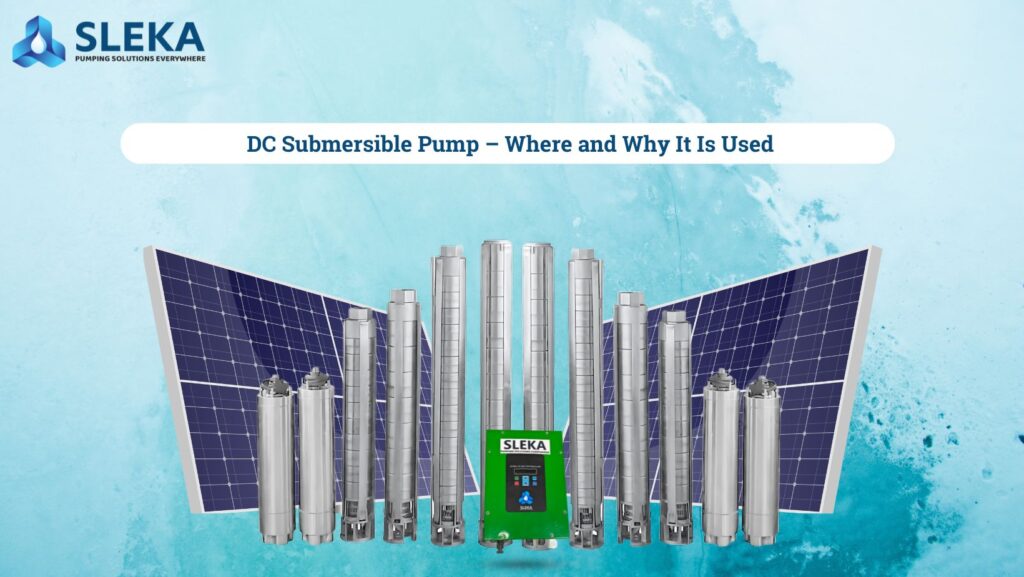
DC Submersible Pump – Where and Why It Is Used
In the modern agricultural landscape and various industrial applications, DC submersible pumps have emerged as a crucial piece of equipment. These pumps offer efficient solutions for water management, enabling users to access and utilize groundwater effectively. This article delves into the applications and advantages of DC submersible pumps, highlighting their significance for farmers and industries alike.
Understanding DC Submersible Pumps
DC submersible pumps are designed to be completely underwater, making them ideal for extracting water from deep wells, boreholes, and other subterranean sources. Unlike their AC counterparts, these pumps operate on direct current, which enhances their efficiency and allows them to function optimally in remote locations where grid power may not be available. The technology behind these pumps ensures that they are not only durable but also capable of handling various water conditions, making them versatile for different applications.
Applications in Agriculture
-
Irrigation: One of the primary uses of DC submersible pumps is in agricultural irrigation systems. They efficiently draw water from wells to irrigate crops, ensuring that farmers can maintain healthy yields even in times of drought. By automating irrigation processes, these pumps help in conserving water and reducing labor costs.
-
Livestock Watering: Farmers utilize DC submersible pumps to provide reliable water sources for livestock. With consistent access to clean water, farmers can ensure the health and productivity of their livestock, which is vital for sustainable farming practices.
-
Water Supply: In rural areas where access to clean drinking water is limited, DC submersible pumps serve as a reliable option for supplying water to communities. They can be utilized in conjunction with solar power systems, providing an eco-friendly solution for water accessibility.
Industrial Applications
DC submersible pumps are also employed across various industrial sectors. They are frequently used in:
-
Mining Operations: In mining, these pumps efficiently remove water from sites, ensuring safe and operational working conditions. They can handle harsh water environments, making them essential for efficient mineral extraction.
-
Construction Sites: Construction projects often require dewatering solutions to manage groundwater. DC submersible pumps offer an effective means to keep sites dry, facilitating construction processes and enhancing safety.
-
Agricultural Processing: Industries involved in agricultural processing use DC submersible pumps to manage water flow in their operations, from transporting materials to washing produce.
Conclusion
The versatility and efficiency of DC submersible pumps make them an invaluable asset for both agricultural and industrial applications. Their ability to operate in remote locations and challenging conditions positions them as a reliable choice for users looking to optimize water management. Whether it’s for irrigation, livestock, or industrial dewatering, these pumps deliver practical solutions with a trusted performance.
FAQ
-
What is the main advantage of using a DC submersible pump?
The main advantage is their efficiency in drawing water from great depths, especially in areas without access to grid power. -
Can DC submersible pumps be powered by solar energy?
Yes, they are often used in conjunction with solar power systems, making them a sustainable option for water management. -
What maintenance is required for DC submersible pumps?
Regular inspections for wear and tear, ensuring proper electrical connections, and monitoring performance levels are essential for maintenance.
For reliable water management solutions, consider the innovative range of products offered by SLEKA INDUSTRIES PVT LTD. Let us help you enhance your agricultural and industrial practices efficiently.