

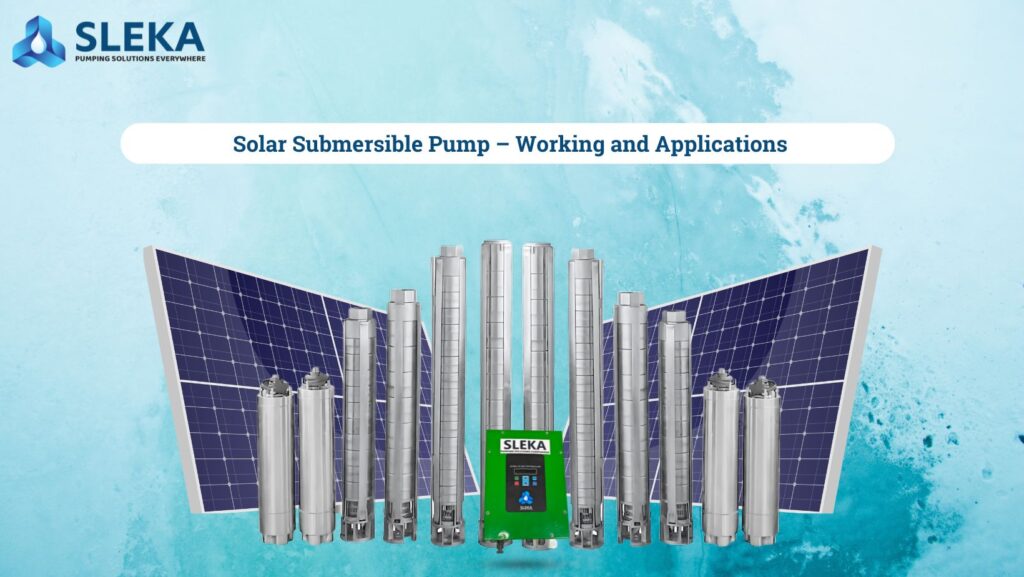
Solar Submersible Pump – Working and Applications
In the realm of agricultural and industrial water management, the solar submersible pump has emerged as a transformative solution. Harnessing solar energy, these pumps not only offer an eco-friendly alternative to traditional pumps but also enhance operational efficiency in water sourcing applications. This article delves into the working principles of solar submersible pumps and their diverse applications in various sectors.
Understanding the Working Mechanism of Solar Submersible Pumps
A solar submersible pump integrates solar panels, a pump, and a motor designed to work efficiently under water. The primary components include:
-
Solar Panels: These capture sunlight and convert it into electrical energy, powering the motor of the pump. The size and efficiency of the panels correspond to the pump’s needs, ensuring optimal performance.
-
Pump and Motor: The motor operates submerged underwater, pushing water to the surface through a series of pipes. This design allows the pump to work silently and without the pollution associated with fossil fuels.
-
Controller: This device manages the entire system, ensuring that energy is efficiently utilized, and can also regulate the motor’s speed depending on water demand.
The system’s simple yet robust design allows it to operate in remote areas where conventional electricity may not be available, making it ideal for rural and agricultural applications.
Applications of Solar Submersible Pumps
Solar submersible pumps are versatile and find applications across various sectors, primarily:
-
Agriculture: Farmers utilize these pumps for irrigation, especially in regions with limited access to electricity. By using solar energy, farmers can significantly reduce operational costs while ensuring consistent water supply to their crops. This technology enables them to maintain productivity even in arid conditions.
-
Drinking Water Supply: In many rural areas, solar submersible pumps are used to provide clean drinking water. The reliability of solar energy allows communities to access safe water without relying on grid electricity, which can be sporadic or non-existent.
-
Industrial Applications: Industries requiring water for processes such as cooling, cleaning, or manufacturing benefit from the efficiency of solar submersible pumps. These systems can be tailored to meet specific industrial needs, making them a smart investment for businesses looking to enhance sustainability.
-
Fish Farming: Solar submersible pumps also play a crucial role in aquaculture, helping to maintain water levels and quality in fish ponds. This support enhances fish health and yields for aquaculture operations.
Conclusion
Solar submersible pumps represent a significant advancement in water management technology, providing an efficient, sustainable, and reliable means of transporting water for various applications. With their ability to function without dependency on traditional power sources, these pumps not only support agricultural and industrial practices but also contribute to a greener planet. As more people recognize their benefits, the adoption of solar submersible pumps is likely to rise, driving innovation in water management.
FAQ
-
What is a solar submersible pump?
A solar submersible pump is a water pump powered by solar energy, designed to operate underwater and effectively transport water to the surface. -
What are the advantages of using a solar submersible pump?
Key advantages include reduced operational costs, sustainability, silent operation, and the ability to function in remote areas without electricity. -
Can solar submersible pumps be used for both agriculture and industry?
Yes, these pumps are versatile and can successfully serve agricultural irrigation needs as well as various industrial applications.
For those considering a reliable water management solution, solar submersible pumps offer a practical and eco-friendly choice that aligns with sustainable practices. Explore the possibilities with SLEKA Industries today.